
Neurological & Complex Conditions
Living with a neurological or complex condition can affect movement, balance, strength, and independence. Neurological & Complex Conditions Exercise Physiology provides safe, structured, evidence-based exercise programs tailored to individual needs.
At Healthsmart Exercise Physiology, we support adults across the Gold Coast and Northern NSW through personalised clinic-based and home-based programs, helping people move with confidence and maintain independence.
What Is Neurological & Complex Conditions Exercise Physiology?
Neurological and complex conditions exercise physiology applies clinical exercise science to conditions involving the brain, spinal cord, nervous system, and complex multi-system health presentations.
Programs are designed to:
- Improve functional movement and mobility
- Enhance balance and reduce falls risk
- Build strength and endurance safely
- Support daily activities and independence
- Improve confidence, participation, and quality of life
Exercise programs are carefully prescribed, monitored, and progressed by an Accredited Exercise Physiologist, with close attention to symptoms, fatigue, safety, and long-term sustainability.
Conditions We Commonly Support
Neurological & Complex Conditions Exercise Physiology may support people living with:
- Stroke and post-stroke rehabilitation
- Parkinson’s disease
- Multiple sclerosis
- Acquired brain injury
- Spinal cord injury (stable and chronic phases)
- Peripheral neuropathy
- Neurological balance and gait disorders
- Complex chronic conditions affecting mobility and function
Programs are adapted to the individual — considering diagnosis, disease stage, mobility level, fatigue, cognitive load, and personal goals.
How Exercise Physiology Helps Neurological Conditions
Neurological conditions often affect how the brain and nervous system communicate with muscles. Targeted exercise can help improve this connection, leading to better movement quality and confidence.
Exercise physiology programs may include:
- Strength training to support posture, transfers, and daily tasks
- Balance and stability training to reduce falls risk
- Gait and walking retraining to improve efficiency and safety
- Coordination and motor control exercises
- Endurance training to manage fatigue and activity tolerance
- Functional task practice, such as sit-to-stand, stairs, reaching, and household activities
All exercises are selected to be safe, achievable, and progressive, with a strong focus on real-world function.
Neurological and complex conditions are rarely static. Symptoms, energy levels, and function can fluctuate over time.
That’s why programs are:
- Individually prescribed
- Progressed or modified session-by-session
- Responsive to fatigue, pain, or symptom changes
- Aligned with medical and allied health input
Your program evolves with you — not the other way around.
Where Sessions Take Place
Clinic & Gym-Based Sessions
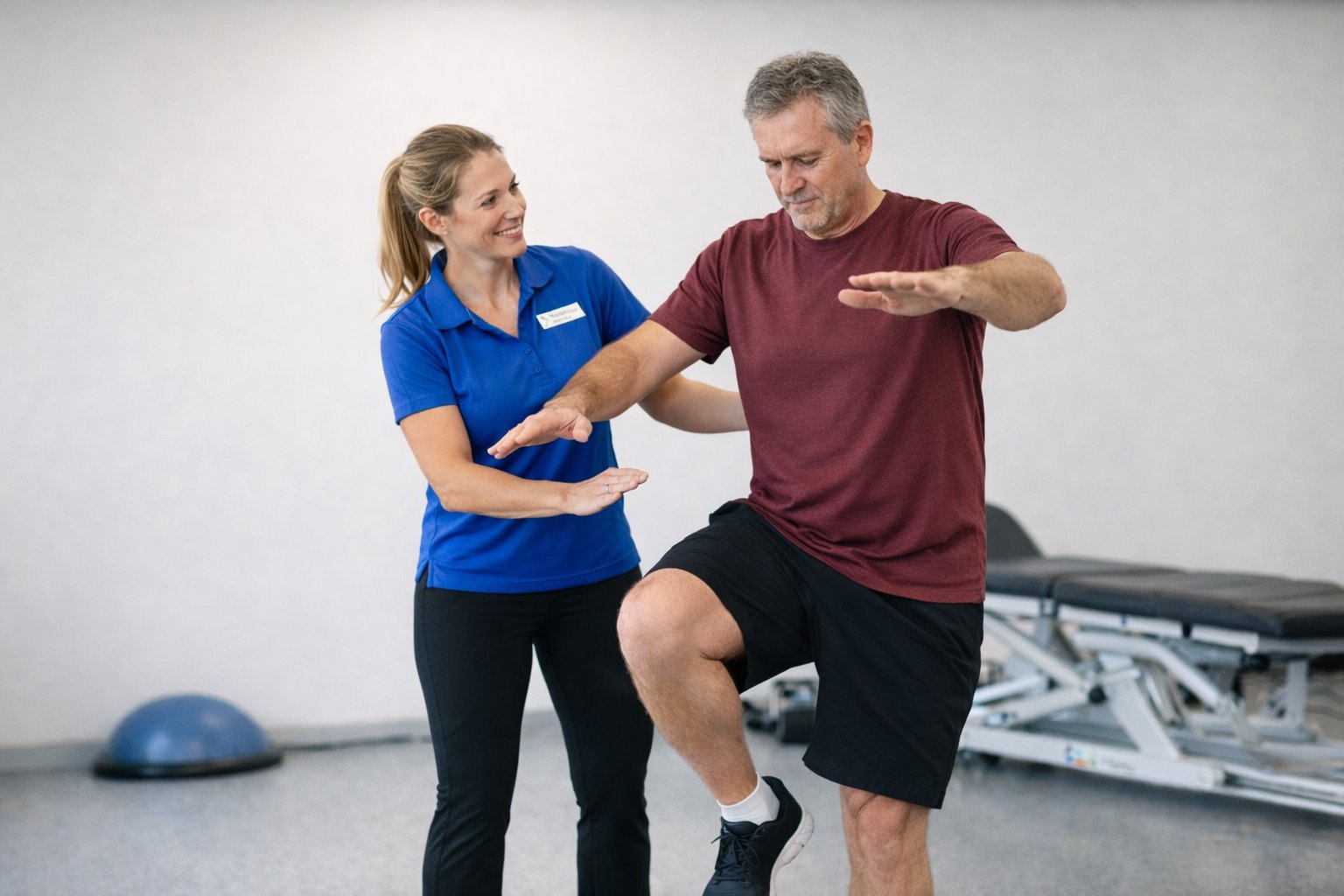
Clinic and gym-based sessions are commonly used as the foundation of exercise physiology programs for people with neurological or complex conditions.
These environments provide access to specialised rehabilitation and strength equipment, allowing exercises to be precisely prescribed, monitored, and progressed. This supports improvements in movement control, strength, endurance, balance, and coordination within a safe and controlled setting.
Clinic and gym-based sessions are particularly beneficial when higher levels of supervision, structured progression, or specific equipment are required. All exercises are individually selected and supervised by an accredited exercise physiologist, with a strong emphasis on safety, confidence, and transfer of skills to everyday function.
Home-Based Sessions
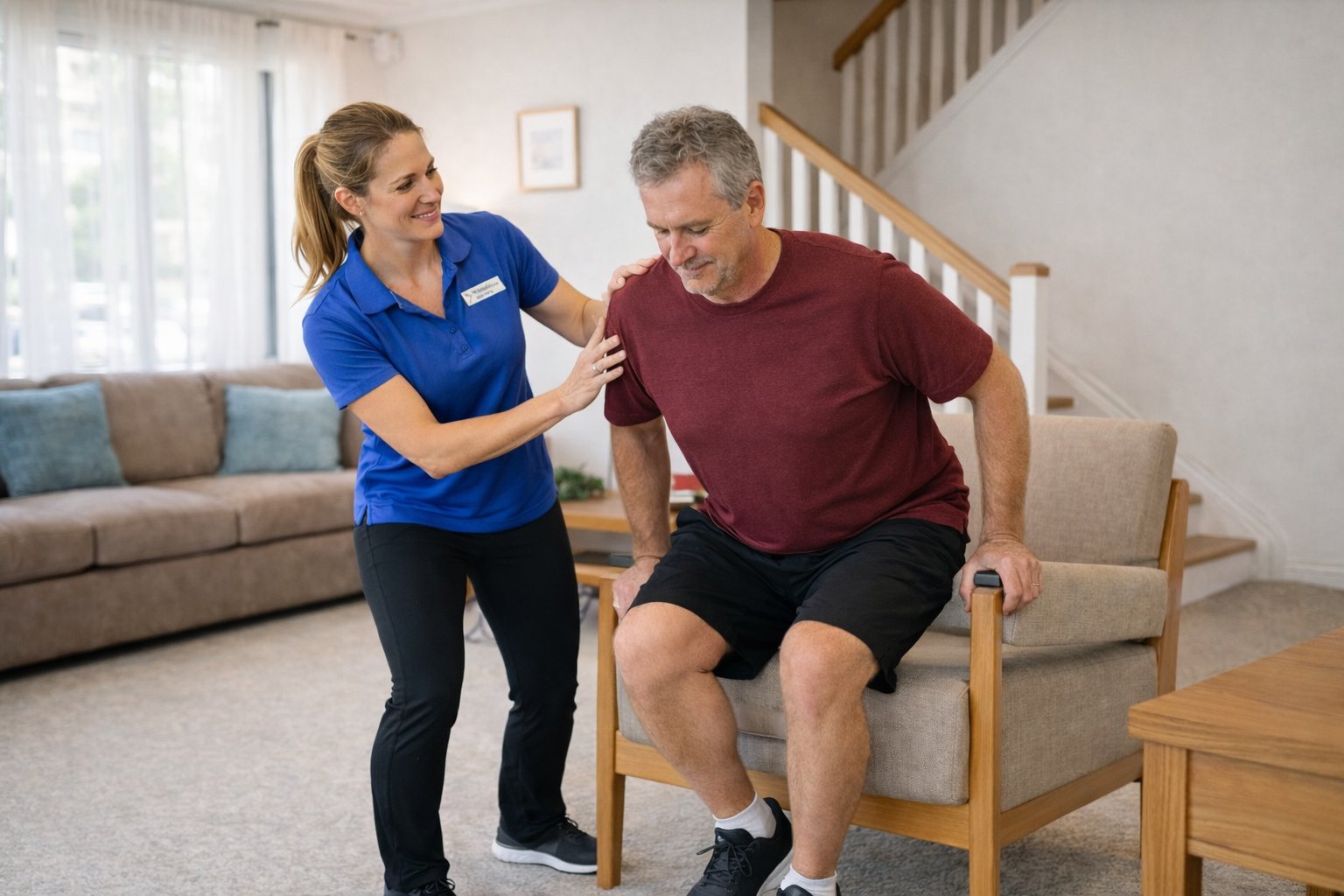
Home-based sessions may be used when familiarity, safety, or real-world functional training is the priority.
Delivering exercise in the home environment allows programs to directly target everyday activities such as transfers, walking, stair negotiation, and household tasks. This approach can be especially valuable for individuals with mobility limitations, fatigue, fluctuating symptoms, or transport challenges.
Home programs are carefully adapted to the available space and equipment, ensuring exercises remain effective, safe, and relevant to daily life.
Hydrotherapy
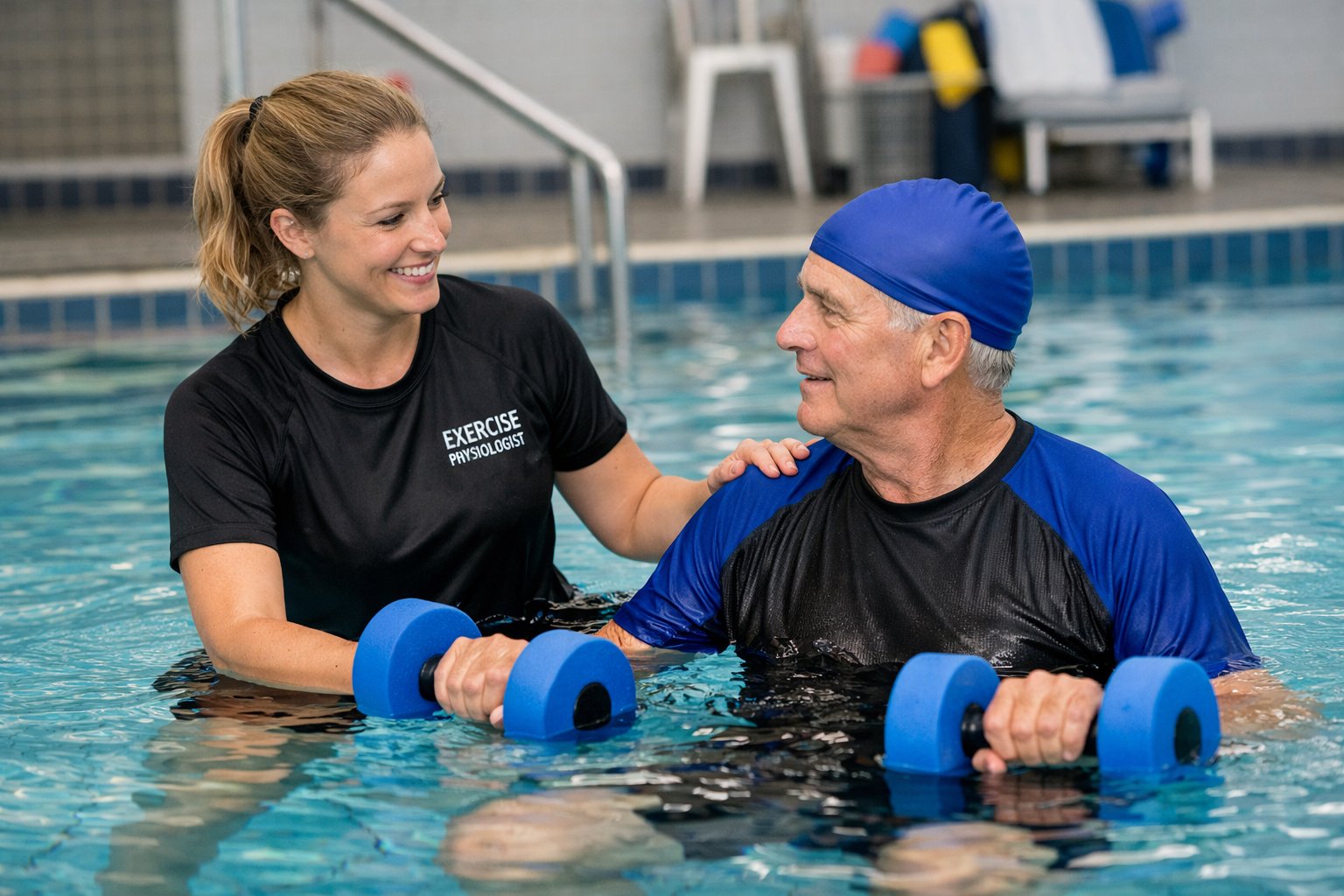
In some cases, hydrotherapy may be used as a supportive addition to land-based exercise physiology programs for people with neurological or complex conditions.
The buoyancy of water can reduce joint load and provide a safe environment to practise balance, movement control, and walking patterns—particularly in the early stages of rehabilitation or during periods of flare-up or fatigue.
Hydrotherapy is incorporated when it clearly supports individual goals and functional progress on land. All water-based exercises are carefully selected and supervised by an accredited exercise physiologist, with a strong focus on safety, confidence, and transfer of skills to everyday activities.
Hybrid Programs
In many cases, a hybrid approach combining clinic, gym, hydrotherapy (where appropriate), and home-based sessions provides the most effective long-term support.
Programs are adjusted over time to reflect changes in symptoms, capacity, goals, or access, ensuring continuity of care and ongoing functional progress regardless of health or mobility changes.
Funding & Referrals
Neurological & Complex Conditions Exercise Physiology services may be accessed through:
Neurological & Complex Conditions Exercise Physiology services may be accessed through:
- NDIS
- Support at Home Packages
- Commonwealth Home Support Programme (CHSP)
- Medicare (EPC plans)
- DVA
- WorkCover Qld & NSW
- Private health or self-funded
We regularly collaborate with GPs, specialists, support coordinators, allied health professionals, and families to ensure coordinated, goal-focused care.
Take the Next Step
If you or a family member is living with a neurological or complex condition, structured exercise support can make a meaningful difference to movement, safety, and independence.
Book an assessment to develop a personalised plan that supports function, confidence, and quality of life — at your pace.