
Balance and Falls Prevention Exercise Physiology
Balance and Falls Prevention Exercise Physiology focuses on reducing falls risk, improving stability, and maintaining independence through structured, evidence-based exercise programs.
At Healthsmart Exercise Physiology, we support adults across the Gold Coast and Northern NSW with individualised clinic-based and home-based programs tailored to balance, strength, and confidence.
Falls are a leading cause of injury-related hospitalisation in older Australians and place a significant burden on individuals, families, and the healthcare system, according to the Australian Institute of Health and Welfare.
At Healthsmart Exercise Physiology, we provide individualised balance and falls prevention programs delivered by an Accredited Exercise Physiologist. Services are available in-clinic or at home across the Gold Coast and Northern NSW, with programs tailored to safety, mobility, and personal goals.
What Is Balance and Falls Prevention Exercise Physiology?
Balance and Falls Prevention Exercise Physiology is a clinical service focused on identifying the underlying contributors to balance impairment and delivering structured, evidence-based exercise to reduce falls risk and improve safe movement.
Balance is not a single skill — it relies on the integration of muscle strength, joint mobility, posture, reaction time, sensory input, and confidence with movement. When one or more of these systems declines, the risk of falling increases. Exercise physiology addresses these factors through targeted assessment and progressive exercise prescription rather than generic balance training.
Who Balance and Falls Prevention Exercise Physiology Is For
Balance & falls prevention programs are suitable for adults who:
- Have experienced one or more falls
- Feel unsteady when walking or turning
- Have reduced confidence with mobility
- Are living with osteoporosis, arthritis, or chronic disease
- Have neurological conditions affecting balance or coordination
- Are recovering from illness, injury, or hospitalisation
- Wish to maintain independence and reduce future falls risk
Programs are individualised and may be delivered in-clinic or at home, depending on safety, mobility, and goals.
Conditions We Commonly Support
Balance & falls prevention programs are commonly provided for people living with or recovering from:
- History of falls or near-falls
- Osteoporosis or low bone density
- Arthritis and joint degeneration
- Neurological conditions affecting movement or coordination
- Chronic disease impacting strength, endurance, or balance
- Post-hospital deconditioning
- Age-related strength and mobility decline
Programs are individualised and may overlap with chronic disease or neurological exercise physiology care.
Our Assessment & Exercise Physiology Process
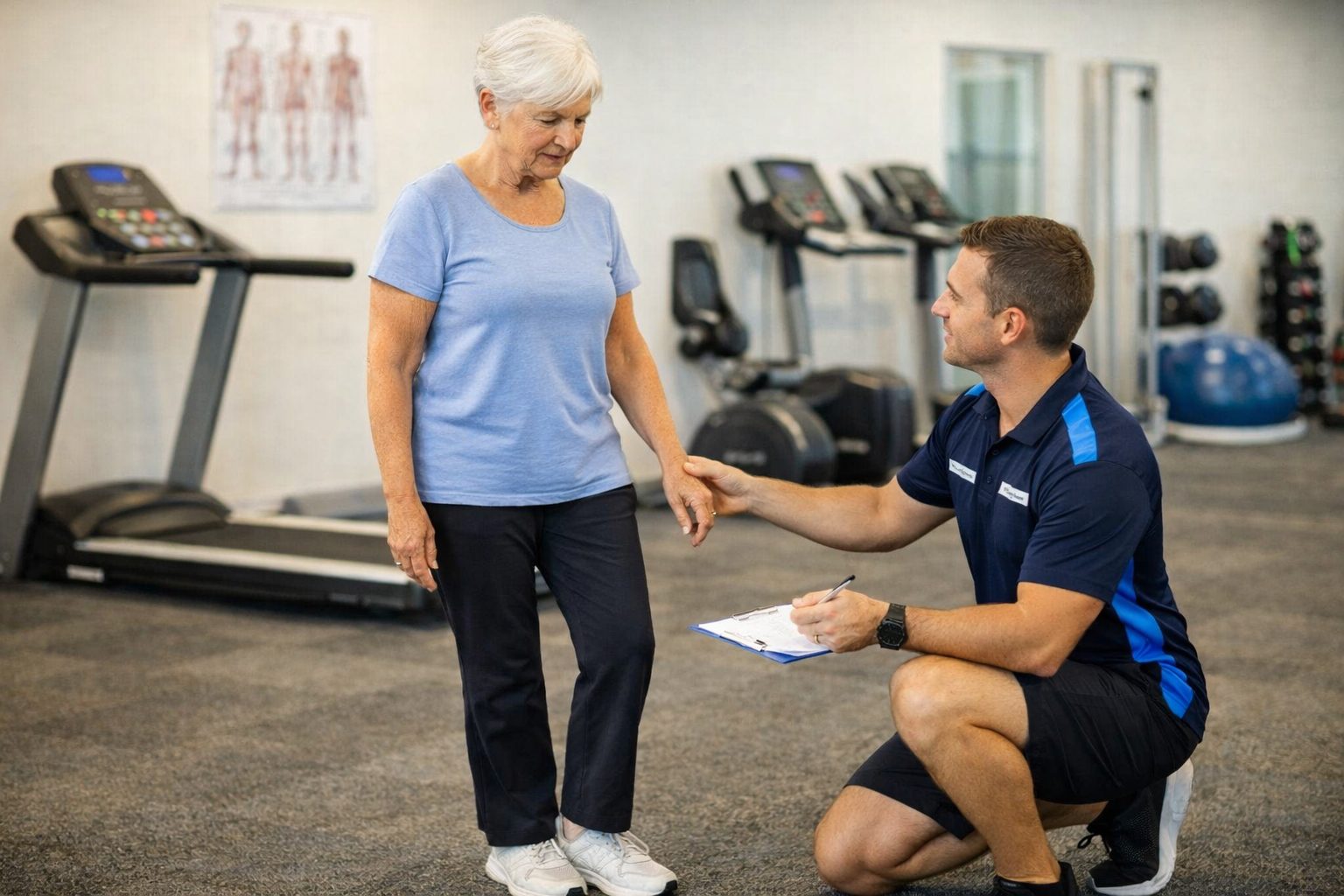
Your program begins with a comprehensive assessment to identify the specific factors contributing to balance impairment and falls risk. This may include assessment of strength, posture, gait, balance strategies, coordination, reaction time, and functional capacity.
Based on your assessment, your exercise physiologist develops a personalised exercise program which may include:
- Progressive lower-limb and trunk strengthening
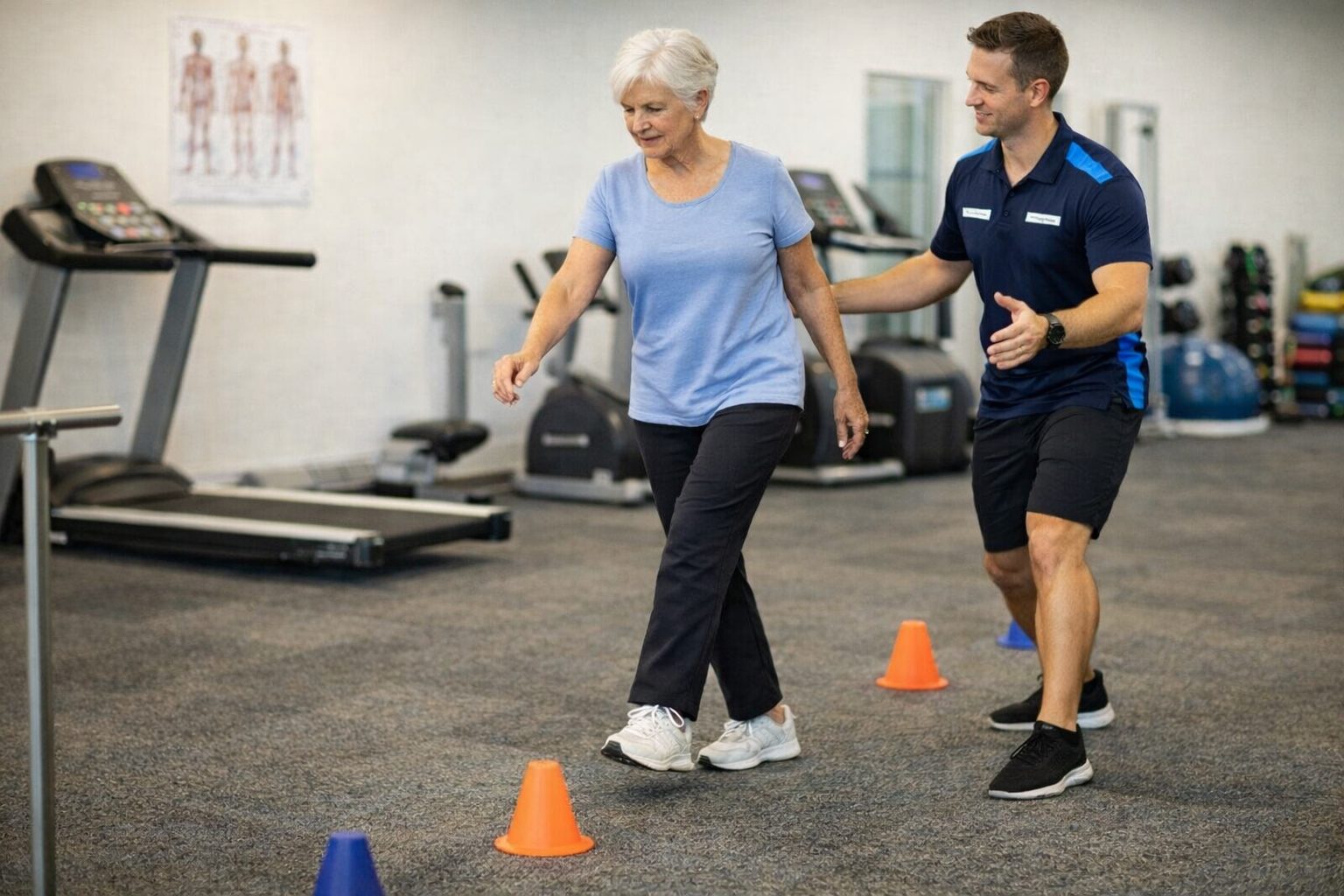
- Static and dynamic balance retraining
- Gait and directional change training
- Functional tasks such as sit-to-stand and step control
- Coordination and reaction-based exercises
Programs are progressed safely and adjusted over time as strength, balance, and confidence improve.
How Our Balance and Falls Prevention Programs Are Delivered
Our falls and balance programs are:
- Clinically assessed — including strength, gait, mobility, and fall risk screening
- Individually prescribed — no group templates or one-size-fits-all programs
- Progressively loaded — exercises evolve as your capacity improves
- Closely supervised — ensuring safety and correct technique
- Function-focused — designed around real-world movements like walking, turning, reaching, and getting up from a chair
Funding & Referrals
Balance and falls prevention exercise physiology may be covered under:
- Medicare (Chronic Disease Management plans)
- Support at Home – Aged Care Packages
- Commonwealth Home Support Programme (CHSP)
- NDIS (where goals align)
- DVA
- Private health options
GP referrals are welcome, and reports can be provided to support coordinated care.
Frequently Asked Questions
Book a Balance and Falls Prevention Assessment
If you would like to reduce falls risk, improve balance, and move with greater confidence, our Accredited Exercise Physiologists are here to help.
Book a Balance and Falls Prevention Assessment today and take a proactive step toward safer movement and greater confidence.